 oversea@hichain.com.cn
 +8617328576881





Information
What factors determine the thickness of wires and cables?
Release time: 2026-07-30
1. The thickness of wires and cables is related to the current they carry.
The current-carrying capacity of a wire varies with its thickness; the thicker the wire, the greater the current it can handle.

2. The thickness of wires and cables is related to their resistivity.
Here, ρ denotes the resistivity. It can be seen that a material’s resistance is directly proportional to its length: when the material and its cross-sectional area remain constant, a longer length results in greater resistance. Conversely, resistance is inversely proportional to the cross-sectional area: with the material and length unchanged, a larger cross-sectional area leads to lower resistance.
From the above equation, we can see that resistivity is defined as: ρ = RS/L. Here, L denotes the length of the material, and S denotes its cross-sectional area.
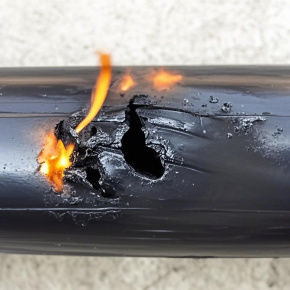
The thinner the wire, the greater its resistance. In power transmission, high voltages are typically used; the higher the resistance, the greater the energy loss. With high voltages, these losses can be substantial, which is why power plants and transmission grids employ very thick conductors.
3. The thickness of wires and cables is related to their power rating.
Power is related to current, and current is related to cross-sectional area; in other words, the thickness of a wire or cable is linked to its power-carrying capacity. Power equals voltage multiplied by current.

Contact Information

Email: oversea@hichain.com.cn

whatsapp: +852 51665706

Copyright ©2023 Hichain Electricity (Zhaoqing) Co.,Ltd. |