 oversea@hichain.com.cn
 +8617328576881





Information
What factors affect the electrical conductivity of a cable? What are the key determinants of its conductive performance?
Release time: 2026-07-23
The conductor is the most critical component of wires and cables, serving as the fundamental element that enables the transmission of electric charge. Typically, wires and cables employ either copper conductors or aluminum‑core conductors; more recent products also feature aluminum‑alloy conductors. Conductivity in wires and cables depends entirely on their conductors. Next, let’s explore the roles of wire and cable conductors and examine the factors that influence their electrical conductivity.

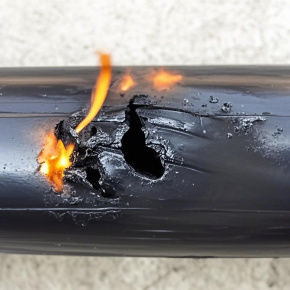
The function of a wire or cable conductor is to carry electric current. When current flows through the conductor, electrical energy losses occur, causing the conductor’s temperature to rise. This temperature increase, in turn, elevates the conductor’s resistance and degrades the insulation’s performance. If the conductor’s temperature exceeds the insulation material’s allowable operating temperature, it accelerates the aging of the insulation; moreover, at cable bends, the insulation may soften and deform first, leading to a shortened service life or, in the short term, to dielectric breakdown at the bend—thus failing to meet the requirements for long‑term cable operation. It should be noted that core losses are primarily determined by the conductor’s cross‑sectional area and the material’s volume resistivity; therefore, the manufacturing process must rigorously inspect and control both the conductor’s dimensions and the material’s key performance parameters.
Factors Affecting the Electrical Conductivity of Wires
1. Temperature of wires and cables: The electrical conductivity of metals decreases as temperature rises. When the temperature is neither very high (close to the melting point) nor very low (close to absolute zero), the resistivity exhibits the following linear relationship with temperature: ρ = ρ0[1 + α(T − T0)].
2. Impurities in wire and cable materials: The presence of certain impurities in metals increases their electrical resistance. The impact of these impurities on metal resistivity depends on their type, concentration, and the form in which they exist within the metal. For copper, elements such as antimony, arsenic, phosphorus, nickel, and lead are considered deleterious impurities; when the arsenic content reaches 0.35%, the resistivity of copper can increase by as much as 50%. In aluminum conductors, the principal harmful impurities are silicon and iron.
3. Plastic Cold Deformation of Wires and Cables: It should be noted that elastic deformation has a negligible effect on the electrical resistance of metals, whereas plastic deformation leads to an increase in resistance. Only when the degree of cold working exceeds 10% does the resistance become significantly higher. For pure metals, the increase in resistance due to cold deformation typically does not exceed 4%. The resistivity of an electrolytic round aluminum rod before drawing is 0.02801 Ω·m; after drawing and processing into the required specifications of electrolytic round aluminum wire, its resistivity rises to 0.028264 Ω·m.
4. Heat Treatment (Annealing): After cold working, the metal undergoes changes in its crystal structure, resulting in increased tensile strength, yield strength, and elasticity, while electrical conductivity and elongation decrease. To enhance the electrical conductivity and ductility of cold‑drawn copper wire, the wire is subjected to a tempering process at a specific temperature, thereby improving both elongation and electrical conductivity; the electrical resistance can be restored to its pre‑deformation level.
5. Environmental conditions for wire and cable applications: When environmental factors cause contamination or oxidation on the metal surface, or when moisture and oil residues are present, the metal’s electrical resistance increases. If a protective coating of another metal is applied to the metal surface, the resulting resistance can be calculated based on the intrinsic resistivity of the composite material and the thickness of the coating. Copper has an accelerating effect on the aging of certain impregnants—such as mineral oil and rosin‑based impregnants—as well as on vulcanized rubber. Under these circumstances, tinning the copper conductor surface can prevent direct contact between the copper and the insulation layer.

Contact Information

Email: oversea@hichain.com.cn

whatsapp: +852 51665706

Copyright ©2023 Hichain Electricity (Zhaoqing) Co.,Ltd. |