 oversea@hichain.com.cn
 +8617328576881





Information
Causes of Cracking in Low-Smoke, Halogen-Free Flame-Retardant Cables
Release time: 2026-07-20
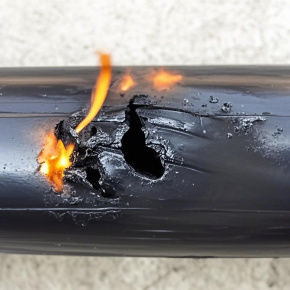
Among low-smoke, halogen-free flame-retardant cables, the most common and vexing quality issue is environmental stress cracking of the insulation material. The primary causes of environmental stress cracking in halogen-free, low-smoke, flame-retardant materials include:


01 Properties of Polymers
Because the addition of flame retardants such as aluminum hydroxide, along with a high loading of magnesium hydroxide, reduces the polymer’s mechanical strength, its elongation at break and flexibility also decline, while its tear resistance remains inherently inadequate. Currently, the most commonly used halogen-free carriers are low-density polyethylene and EVA; when combined with flame retardants, the resulting composite materials tend to exhibit relatively high hardness. In particular, to meet the IEC 332‑1 flame‑retardancy standard (single‑cable burning test), the material’s limiting oxygen index typically exceeds 28, and its hardness often surpasses Shore A 90.
02 Extrusion Processing of Materials
Based on the high‑filling characteristics of halogen‑free, low‑smoke materials that use metal hydrates as flame retardants, improper process parameters—such as inappropriate processing temperatures or unsuitable screw compression ratios during extrusion—can lead to the decomposition of hydrated oxides and the scission of polymer chains under high shear. Moreover, due to elevated pressures, the extruder’s speed may fail to reach its nominal setpoint, resulting in excessively long residence times between the barrel and the screw. Under the high temperatures generated by friction, the hydrated oxides decompose prematurely, forming internal voids within the material. Concurrently, the mechanical strength and flexural resistance of the extruded product decline sharply, further exacerbating these adverse effects.
03 Operating Environment and Storage Conditions
Halogen-free, low-smoke materials based on polyethylene are highly sensitive to temperature. When temperature fluctuations are significant, thermal expansion and contraction can generate internal stresses that often lead to interfacial cracks. For example, when halogen-free flame-retardant cables are stored in the customer’s premises—without any external packaging—and exposed to direct sunlight, after one week nearly all cable reels exhibited longitudinal cracks on their sun-exposed sides, with crack lengths reaching up to half the reel’s circumference. Analysis of the cable reels revealed that substantial temperature differentials between the two faces, combined with high bending stresses, result in material cracking on both sides.
04 Factors Affecting Extrusion Dies
The structural configuration of the extrusion die, the draw ratio, and the draw‑force balance ratio all play crucial roles in eliminating residual stresses after extrusion. Typically, a low‑pressure semi‑die is employed. The draw ratio and draw‑force balance ratio of the internal die should be maintained at 1:2 and close to 1, respectively.

Contact Information

Email: oversea@hichain.com.cn

whatsapp: +852 51665706

Copyright ©2023 Hichain Electricity (Zhaoqing) Co.,Ltd. |