 oversea@hichain.com.cn
 +8617328576881




Information
Identification Method for Radiation‑Crosslinked Low‑Smoke Halogen‑Free Flame‑Retardant Wires and Cables
Release time: 2026-06-29
Radiation‑crosslinked, low‑smoke, halogen‑free, flame‑retardant wires and cables have become standard materials for major engineering projects, thanks to their combined advantages in electrical insulation, heat resistance, and environmental friendliness. However, in recent years, substandard counterfeit products have entered the market, substituting inferior materials for superior ones, thereby severely disrupting the proper material‑selection process and posing a direct threat to project safety.
In light of this situation, drawing on material properties and key manufacturing processes, we have compiled the following three straightforward identification methods to help you cut through surface appearances and quickly distinguish genuine cables from counterfeits.
1. Soldering iron burn
When you lightly heat the insulation layer with a soldering iron, there should be no noticeable indentation. If a significant indentation is present, it indicates that the insulation material or manufacturing process has defects.
2. Lighter burn
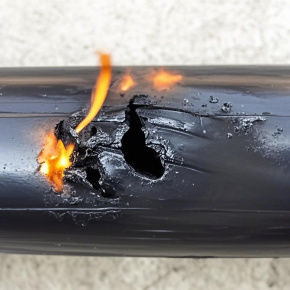
When subjected to a lighter flame, the cable should normally be difficult to ignite. After prolonged burning, its insulation layer remains largely intact, producing no dense smoke or irritating odors, while its diameter may slightly increase. If the cable ignites readily, it can be concluded that its insulation does not use low‑smoke, halogen‑free materials. Excessive smoke indicates that halogen‑containing materials were used in the insulation. Furthermore, if prolonged combustion results in severe surface delamination of the insulation and no noticeable increase in diameter, this suggests that appropriate radiation crosslinking treatment was not applied.
3. Density Comparison
Low-smoke, halogen-free materials have a density greater than that of water. You can peel off a small section of the insulation and place it in water; if it floats on the surface, it is certainly not a low-smoke, halogen-free material.

Contact Information

Email: oversea@hichain.com.cn

whatsapp: +852 51665706

Copyright ©2023 Hichain Electricity (Zhaoqing) Co.,Ltd. |