 oversea@hichain.com.cn
 +8617328576881





Information
Insulation Layer Structure and Material Properties of Extruded‑Type Cables
Release time: 2026-06-08
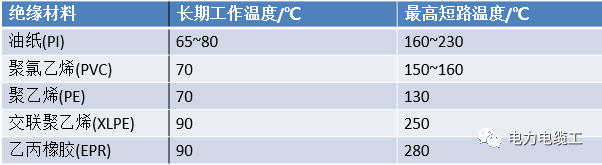
Extruded insulation material — Various types of plastics and rubbers are polymeric materials that are extruded in a single step to form a tight sheath around the cable conductor. Plastics and rubbers are homogeneous dielectrics, which differs fundamentally from the layered structure of oil‑impregnated paper. Polyvinyl chloride ( PVC ), polyethylene ( PE ), cross-linked polyethylene ( XLPE ) and ethylene-propylene rubber ( ethylene propylene rubber ( EPR The main performance characteristics are as follows:
( 1 Polyvinyl chloride (PVC) plastic is manufactured by blending and plasticizing polyvinyl chloride resin as the primary raw material, together with appropriate amounts of compounding agents, plasticizers, stabilizers, fillers, colorants, and other additives.
Polyvinyl chloride exhibits excellent electrical properties and high mechanical strength, along with resistance to acids, alkalis, and oils, and it also boasts favorable processing characteristics.
The drawbacks are relatively poor heat resistance, low insulation resistivity, and high dielectric loss; therefore, it can only be used for… 6kV Cable insulation of 1 kV and below.
( 2 Polyethylene exhibits excellent electrical properties, with a low dielectric constant, low dielectric loss, and ease of processing.
Its drawbacks include poor heat resistance, low mechanical strength, inadequate corona resistance, and a tendency to undergo environmental stress cracking.
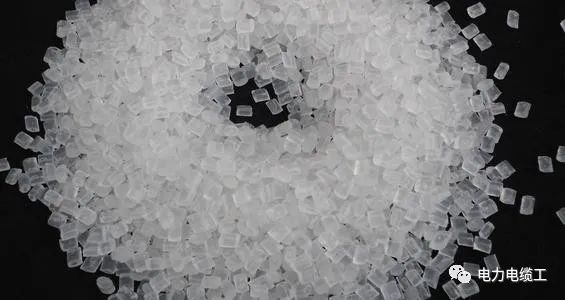
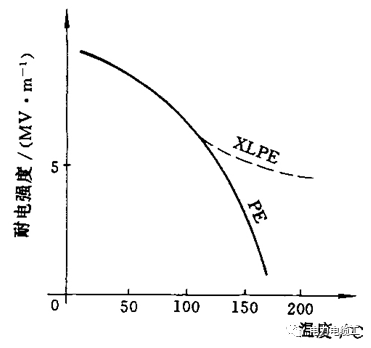
( 3 ) Cross-linked polyethylene is the product obtained when polyethylene undergoes a cross-linking reaction.
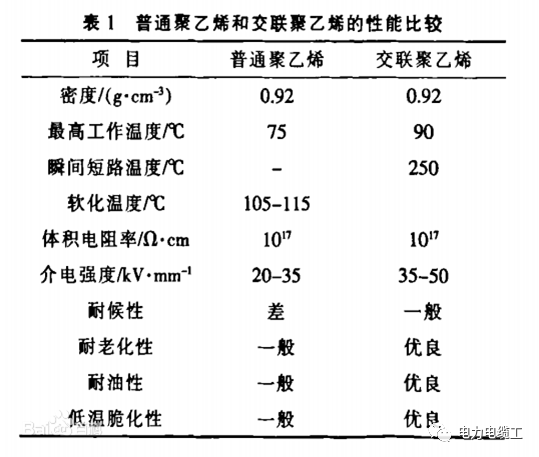
By means of crosslinking, linear or branched polyethylene is transformed into a three-dimensional network‑structured crosslinked polyethylene, thereby enhancing its electrical properties, heat resistance, and mechanical performance.
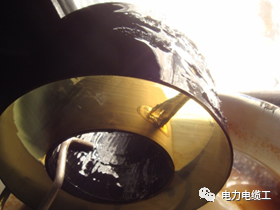
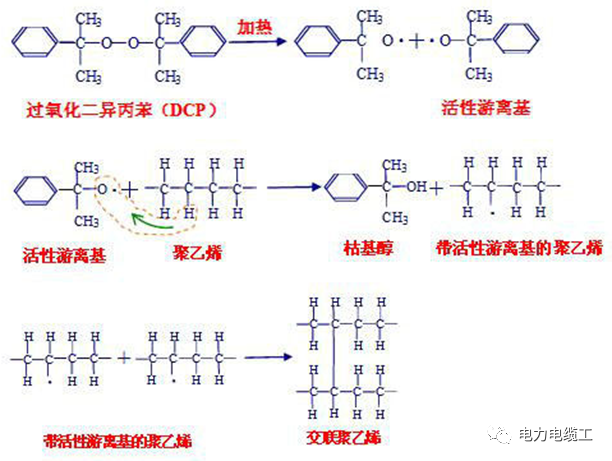
The fundamental mechanism of polyethylene crosslinking involves the use of physical methods. ( For example, by irradiating with high-energy particle beams. ) Or a chemical method. ( For example, by incorporating peroxide-based chemical crosslinking agents or using silane grafting, etc. ) It abstracts hydrogen atoms from polyethylene, converting it into polyethylene molecules bearing active functional groups. Subsequently, these active‑group‑bearing polyethylene molecules undergo crosslinking to form macromolecules with a three-dimensional network structure.
( 4 ) Ethylene-propylene rubber is a type of synthetic rubber.
Ethylene–propylene rubber used as cable insulation is produced by the copolymerization of ethylene, propylene, and a small amount of a third monomer.
Ethylene–propylene rubber exhibits excellent electrical properties, heat resistance, and resistance to ozone and weathering.
Its drawback is that it is not oil-resistant and can burn.
This article is excerpted from “Technical Q&A on the Installation and Operation of Power Cables.” 1.7 What are the structure of cable insulation layers and the properties of their materials? Image source: the internet.

Contact Information

Email: oversea@hichain.com.cn

whatsapp: +852 51665706

Copyright ©2023 Hichain Electricity (Zhaoqing) Co.,Ltd. |