 oversea@hichain.com.cn
 +8617328576881





Information
What is a control signal cable?
Release time: 2025-12-05
Control signal cable: It is a cable specifically designed for transmitting control signals, primarily used to connect the control center with various systems to relay signals or perform control operations.
Scope of application
It is suitable for industrial and mining enterprises, energy and transportation sectors, and AC-rated voltage supplies. 450/750 For applications such as control and protection circuits below the threshold.
Main features
Multi-core structure: Control signal cables typically adopt a multi-core structure to meet the need for simultaneously transmitting multiple control signals.
Excellent electrical performance: The control signal cable boasts excellent electrical performance, including high insulation resistance, low transmission impedance, and favorable capacitance and inductance characteristics, ensuring accurate signal transmission.
High mechanical strength: Control signal cables typically have good mechanical strength, enabling them to withstand certain tensile forces and bending, and to adapt to various installation environments.
Strong anti-interference capability: The control signal cable has strong anti-interference capability, able to withstand electromagnetic interference and noise, thus ensuring stable signal transmission.
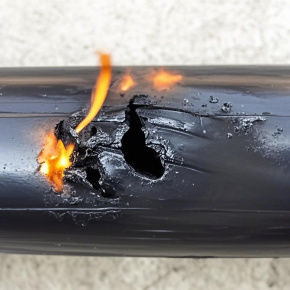
Excellent flame-retardant performance: Control signal cables typically have excellent flame-retardant properties, which can slow down the spread of fire in the event of a fire and enhance safety.
Fast transmission speed: The control signal cable has a faster transmission speed, capable of meeting the demands of high-speed data transmission, and is suitable for various control systems that require rapid response.
Long transmission distance: Control signal cables can transmit over longer distances with minimal signal attenuation, ensuring high-quality and stable signal transmission.
High reliability: The control signal cable boasts superior insulation and mechanical performance, enabling stable operation even in harsh working environments and offering high reliability.
Flexible use: The structural design of control signal cables is flexible and can be customized to meet different application requirements, such as varying numbers of conductors, insulation materials, and jacket materials.
The difference between control signal cables and control cables
Control signal cables and control cables are both used to transmit control signals; however, their main differences lie in their functions, structures, application scenarios, and electrical performance parameters.
Depending on the application environment and requirements, control signal cables can be categorized into various types. When selecting a control signal cable, it is essential to take into account comprehensively factors such as the specific application scenario, transmission distance, signal type, ambient temperature, and others, in order to choose the most suitable cable type and specifications. Moreover, the installation and laying of control signal cables must also comply with certain codes and standards, including cable bending radius, fixing methods, grounding measures, and other relevant guidelines, to ensure the cable’s proper operation and operational safety.

Contact Information

Email: oversea@hichain.com.cn

whatsapp: +852 51665706

Copyright ©2023 Hichain Electricity (Zhaoqing) Co.,Ltd. |