 oversea@hichain.com.cn
 +8617328576881





Information
How can we prevent fires caused by overloaded wires and cables?
Release time: 2025-11-28
Wires and cables During operation, resistance causes the wire to generate heat. The resistance of a conductor is typically very small, and its heat generation power can be expressed by the formula q = I²R. The equation q = I²R indicates that, for a conductor in actual use (where R is essentially constant), the greater the current flowing through the conductor, the higher its heat generation power will be. Conversely, if the current remains constant, the conductor’s heat generation power will also remain constant. The heat released during operation is absorbed by the conductor itself, causing its temperature to rise. Although the conductor continuously absorbs heat generated by the electrical work it performs, its temperature does not rise indefinitely. This is because, while absorbing heat, the conductor is also constantly dissipating heat to the surrounding environment. In practice, after a conductor is energized, its temperature gradually increases until it eventually stabilizes at a certain point. At this steady-state temperature, the conductor’s heat absorption rate equals its heat dissipation rate, and the conductor reaches thermal equilibrium. The conductor’s ability to operate at higher temperatures is limited; exceeding a certain maximum temperature poses a danger. Naturally, this maximum temperature corresponds to a specific maximum current—when the conductor operates beyond this maximum current, it is considered overloaded. Overloading the conductor directly leads to a rise in temperature not only of the conductor itself but also of nearby objects. This increase in temperature is the most direct cause of fires of this type.
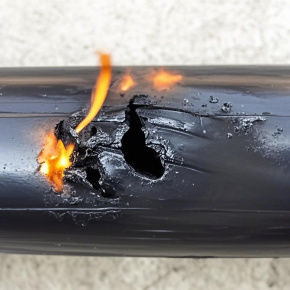
Overloading can cause the insulation layer between two conductors to break down, leading to a short circuit that burns out equipment and triggers a fire. The two conductors are separated by an insulating layer; when overloaded, this insulation layer softens and breaks down, allowing the two conductors to come into direct contact and causing a short circuit that damages the equipment. At the same time, the high temperature generated by the enormous current surge during the short circuit can ignite the wiring itself, causing it to melt and form molten droplets that fall onto flammable materials, thereby igniting a fire. Moreover, the temperature rise caused by overloading can directly ignite nearby combustible materials. As overheated conductors transfer heat, the temperature of nearby combustibles rises. For combustibles with lower ignition points located in close proximity, there is a real risk of these materials being ignited and a fire breaking out. This danger is particularly pronounced in warehouses storing flammable substances and in buildings featuring flammable or combustible decorations.
Overloading also causes connections in the circuit to operate under overheated conditions, which accelerates their oxidation process. Oxidation forms a thin oxide film at the connection points, a film that is poor in conductivity. This oxide film increases the resistance between contact points, leading to phenomena such as arcing and potentially causing fires.
So, how can we prevent fires caused by overloaded wires and cables?
1 During the circuit design process, it is essential to accurately determine the capacity of the premises and fully consider the possibility of future capacity increases when selecting an appropriate wire gauge. For installations with high capacity, thicker wires should be chosen. Proper selection of equipment and wiring types during circuit design is a critical step in preventing overloading. If the design and equipment selection are inadequate, latent problems that are difficult to rectify may be left behind. In some small-scale projects and premises, designers often fail to conduct careful planning and selection. Randomly choosing and installing wiring can be extremely dangerous. When adding new electrical appliances or equipment, it is crucial to take full account of the existing wiring’s capacity. If the original wiring does not meet the required standards, it should be redesigned and upgraded accordingly.
2 The wiring should be installed and laid by qualified electricians in accordance with relevant code requirements. The installation conditions of the wiring directly affect the heat dissipation performance of the conductors. Generally speaking, wiring should not be routed through flammable or combustible materials or stacks, as this could impede heat dissipation, cause heat to accumulate, and increase the likelihood of igniting nearby combustible items, thereby heightening the risk of fire in the event of an overload. In public entertainment venues, wiring installed within suspended ceilings should be protected by steel conduits to keep the ceiling separate from the wiring. This way, even if molten droplets form during an overload or short circuit, they will not fall onto the ceiling, thus helping to prevent fires.
3 Strengthen electricity management by avoiding random wiring and haphazard connections, and use portable power strips with caution. Random wiring, haphazard connections, and the use of portable power strips essentially add electrical devices to a particular circuit, increasing the current flow and potentially causing an overload. Portable power strips have significantly more outlets than fixed wall sockets; if too many electrical devices are plugged into a single portable power strip, the existing wiring will inevitably struggle to handle the increased load. For high-power appliances and devices, it’s advisable to provide dedicated circuits rather than relying on portable power strips as a source of power connection.
4 Accelerate the upgrading and renovation of aging power lines to eliminate fire hazards. In older enterprises and residential areas, many power lines have become aged and exceeded their service life due to prolonged usage. Even if some lines carry relatively low currents, aged lines are often unable to handle such loads, posing significant risks of overload. This is particularly true in older residential areas, where power lines have long since deteriorated. Yet, as people’s living standards improve and the number of household appliances increases, electricity consumption continues to rise year after year—adding fuel to the fire. For these aging power lines, it is essential to promptly supervise and coordinate efforts to expedite necessary renovations, thereby eliminating fire hazards and ensuring safety.

Contact Information

Email: oversea@hichain.com.cn

whatsapp: +852 51665706

Copyright ©2023 Hichain Electricity (Zhaoqing) Co.,Ltd. |