 oversea@hichain.com.cn
 +8617328576881





Information
Factors to Consider When Selecting Wires and Cables for Residential Fresh Air Systems
Release time: 2025-11-25
When selecting wires and cables for fresh air systems, it's necessary to consider factors such as cable cross-sectional area, material, temperature resistance, flame retardancy, and environmental friendliness.
Power cable selection:
Based on the host power and current requirements of the fresh air system, select an appropriate cable cross-sectional area. For example, for 3.5kW The new ventilation fan, if the current is 7A Right, the power supply distance is within 30 Within 1 meter, it is recommended to use 1.5 A copper-core cable with a cross-sectional area of square millimeters. The safe breaking current for this type of cable is approximately 18A , capable of meeting the power requirements of the fresh air fan.
Control Line Selection:
Control lines typically carry small currents, so you can choose 1.5 mm² Or 1 mm² Multi-strand sheathed cables. These cables are suitable for transmitting control signals in fresh-air systems, such as those used in control panels, sensors, and more.
Cable material:
Copper-core cables: Due to copper's excellent conductivity and heat dissipation properties, they are a commonly used cable material in fresh-air systems.
Temperature resistance performance:
Based on the maximum temperature the cables in the fresh-air system may endure, select cables with temperature-resistant properties that meet the requirements. For instance, for sections located near heat sources, cables capable of handling higher temperatures should be chosen.
Flame-retardant performance:
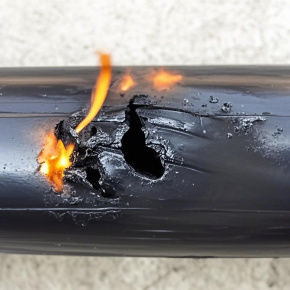
According to the "Code for Fire Protection in Building Design" GB 50016 The requirements stipulate that the cables for the fresh-air system must have excellent flame-retardant properties to minimize fire risks.
Environmental Performance:
Choose cables that meet environmental standards, such as low-smoke, halogen-free cables, to minimize harm to the environment and people.
Cable specifications:
The specifications of the cable shall comply with relevant national and industry standards, such as the "Code for Acceptance of Construction Quality of Ventilation and Air-Conditioning Engineering." GB 50243 Etc.
Cable Laying:
Cable laying should follow relevant standards, such as the "Code for Design of Heating, Ventilation and Air Conditioning in Civil Buildings." GB 50736-2012 Wait to ensure the safety and reasonableness of cable installation.
When selecting wires and cables for a fresh-air system, the appropriate cable model and specifications should be determined based on the system's specific requirements and relevant national standards, ensuring the system's safety, reliability, and environmental performance.

Contact Information

Email: oversea@hichain.com.cn

whatsapp: +852 51665706

Copyright ©2023 Hichain Electricity (Zhaoqing) Co.,Ltd. |