 oversea@hichain.com.cn
 +8617328576881





Information
What tests are required for wires and cables?
Release time: 2025-10-20
Low-Temperature Performance Testing
Including low-temperature winding, Low-Temperature Impact and Related Projects To ensure the performance and safety of cables under extreme temperature conditions.
Physical Performance Testing
Including tests for tensile strength and elongation at break, as well as aging resistance, these assessments help ensure that the cables maintain their performance and integrity over extended periods of use.
Electrical Performance Testing
These tests, including conductor DC resistance, finished product voltage testing, and insulation core-to-core voltage testing, are critical for evaluating the electrical safety and transmission efficiency of cables.
Mechanical Performance and Environmental Resistance Testing
Including tensile strength and fracture tests, as well as aging experiments, these tests help ensure that the cables maintain their performance and integrity over prolonged use.
Appearance and Structural Inspection
Please inspect the cable for a smooth and uniform appearance, ensuring there are no defects such as burrs, cracks, spots, or oil stains. Additionally, verify that the insulation and sheath thickness meet the specified requirements. Furthermore, perform dimensional and structural inspections to confirm that the cable's external dimensions and internal structure comply with the relevant standards.
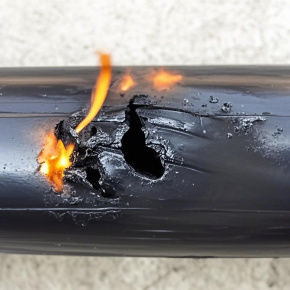
Flame Retardancy Testing :
The testing of flame-retardant properties for wires and cables is conducted to ensure that, in the event of a fire, these cables can effectively limit the spread of flames, thereby safeguarding both personnel and property.
Detection of Other Specific Standards:
Depending on the specific application area and national standards, cables may also require particular types of testing.

Contact Information

Email: oversea@hichain.com.cn

whatsapp: +852 51665706

Copyright ©2023 Hichain Electricity (Zhaoqing) Co.,Ltd. |