 oversea@hichain.com.cn
 +8617328576881





Information
A method to effectively prevent core wire breakage in energy chains
Release time: 2025-10-09
The requirements for using energy chain cables are significantly higher than those for ordinary cables. If the production processes and manufacturing procedures aren't standardized, the cables are prone to core breakage during use. This not only disrupts the normal operation of machinery and equipment but also leads to substantial losses for businesses. Once an energy chain cable experiences core failure, it must be replaced immediately, inevitably increasing production costs. Today, we’ll explain the reasons behind this issue.
Raw materials selected are substandard
The functions of energy chain cables produced from different raw materials also vary. For instance, in specific environments, the cables need to exhibit features such as cold resistance, UV protection, and oil resistance—each of which places certain demands on the performance of the outer jacket. If the outer jacket has excellent abrasion resistance, it won’t stick together. However, the thicker the jacket, the slower the heat dissipation will be; therefore, improper material selection for the jacket could easily lead to core breakage.
The conductor specifications do not meet the standards.
Generally speaking, the thinner the conductor, the better the cable's flexibility. However, if the conductor is too thin, the likelihood of the cable becoming tangled during use increases significantly. Over time, this could lead to issues such as insufficient rigidity, material wear—and even breakage.
Shielding Layer Production Process
The primary reason for this phenomenon is the improper handling of copper wire connectors during the weaving or twisting of highly flexible energy chain cables. Additionally, these cables often lack sufficient anti-torsion performance, leading to excessively severe twisting that causes their braided layers to spontaneously break apart.
Outer jacket damaged
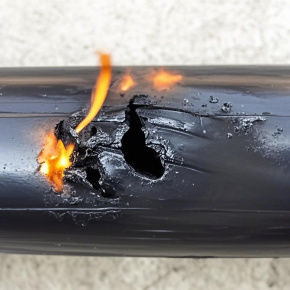
Damage to the outer jacket is related to both the materials used in production and their performance characteristics. However, if users handle the cable improperly—such as causing the conductor to overheat or leading to insulation breakdown—the risk of these issues significantly increases. This, in turn, is the primary reason behind core breakage in energy chain cables. Therefore, it’s crucial that energy chain cables are manufactured to stringent quality standards, and users should opt for products sourced from reputable channels and trusted manufacturers.
Regular inspection and maintenance
- Regular check-ups : Establish a regular inspection system to check whether the cable outer sheath has any Wear, deformation, blistering, cracking Signs of it.
- Pay attention to anomalies : Pay attention to whether there are any unusual noises during equipment operation, and whether the system is experiencing issues. Occasional signal interference or power failures , This could be an early sign that the internal core wire is beginning to break.
- Replace it promptly : Don’t wait until the cable has completely broken before replacing it. As soon as you notice obvious signs of fatigue damage, replace it promptly during a scheduled shutdown to prevent production interruptions or more extensive equipment damage.
Summary
To effectively prevent the core wires of energy chain cables from breaking, it’s essential to follow a complete chain:
Correct selection (specialized high-flexibility cables) → Proper installation (slack, parallel, secured) → Rational usage (ensuring the bending radius) → Regular maintenance
Among them, Correct Selection It is the foundation, Correct Installation It’s a guarantee. Neglecting any single component could significantly shorten the cable’s lifespan. Investing in a high-quality, energy chain-specific cable and installing it according to specifications will yield far greater overall benefits—longevity and superior reliability—than the risks associated with initially opting for cost-saving, standard cables.

Contact Information

Email: oversea@hichain.com.cn

whatsapp: +852 51665706

Copyright ©2023 Hichain Electricity (Zhaoqing) Co.,Ltd. |